
Infected Paintings
Painting as contaminated surface
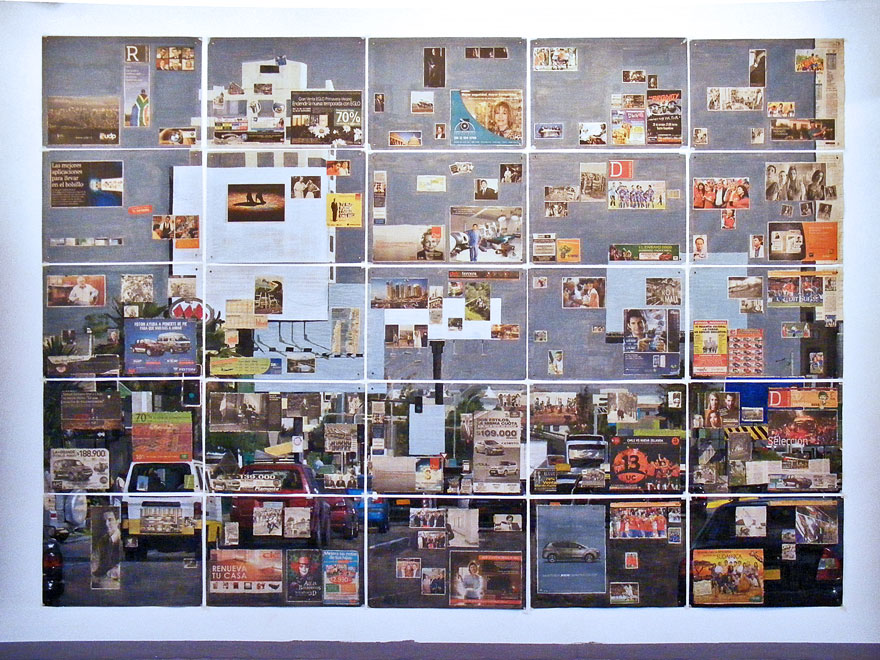
Infected Paintings are works where pictorial tradition is crossed by recycled paper, advertising fragments, printed matter, and industrial residue. The noble surface of painting is deliberately altered by materials that belong to the excess of contemporary life.
Catalogues, magazines, newspapers, and printed advertising become support, pigment, archive, and symptom. Their use allows waste to become critical image and makes visible the tension between the clean and the toxic, the natural and the contaminated, the pictorial and the residual.
Traditional Supports
Interventions and productions on conventional pictorial formats, where recycled printed matter interrupts the surface and changes its symbolic clarity.
The works in this area use the language of painting to expose erosion, damage, and the persistence of contamination.
Soft Supports
Membranes, modules, and units expand painting into flexible formats closer to skin, wrapping, residue, and portable fragments.
Modules and repeated units allow the contaminated image to operate as a system.
Individual units function as small records of a wider visual condition.