Images of the Ancestors
Memory, territory, and cultural continuity
Images of the Ancestors brings together works that connect memory, identity, and territory. The ancestral is understood as a living continuity rather than a distant image of the past: a presence, with its conflicts, inside the contemporary city.
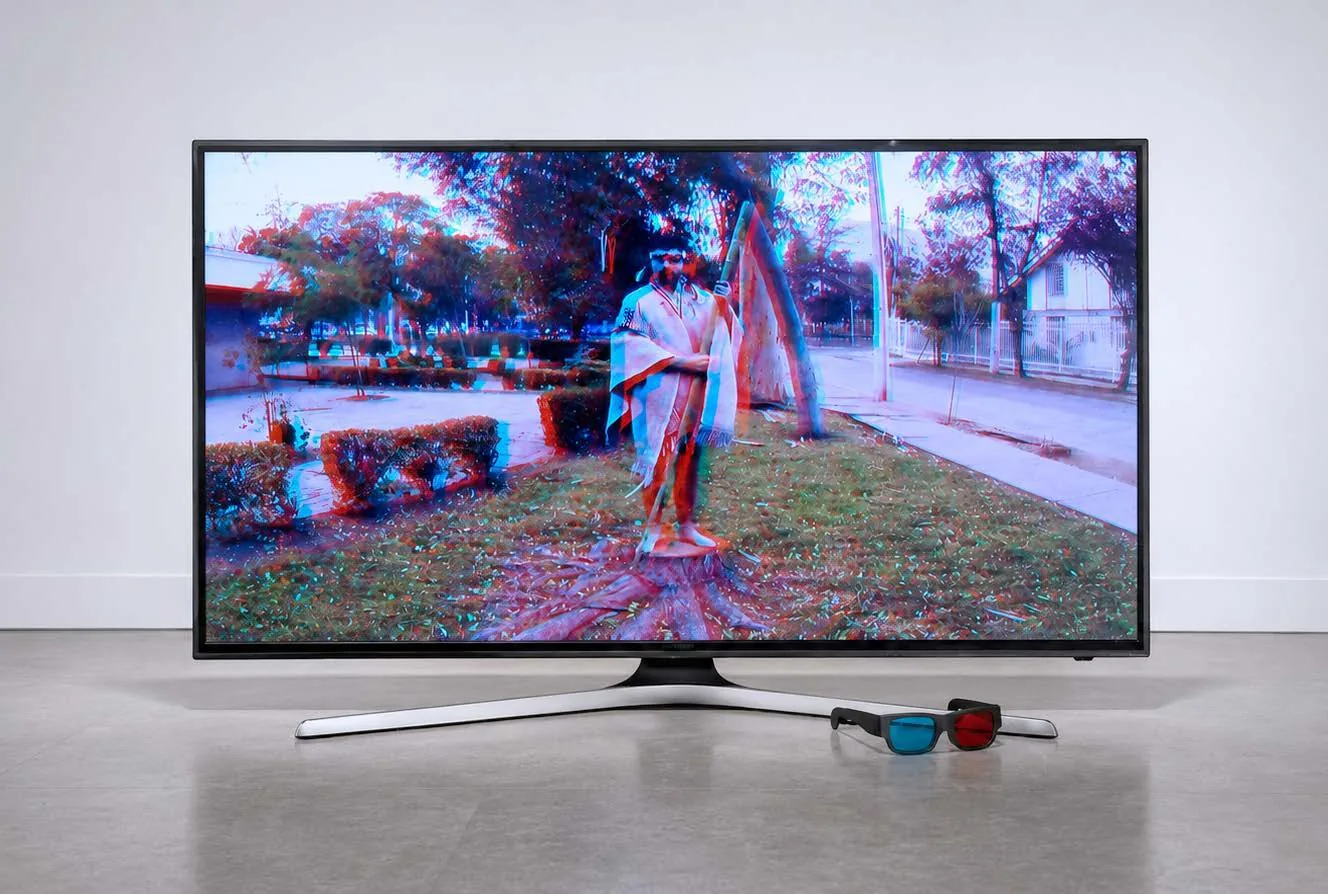
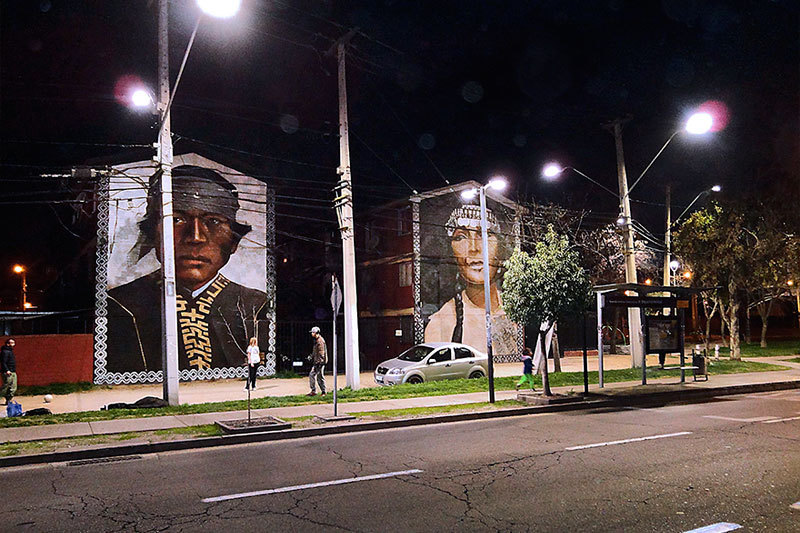
Urban Mapuche / The Felling of Memory uses body, stereoscopic photography, and video to link urban Mapuche identity with felled trees and interrupted memories. Musoe Open Air moves portraits of Indigenous peoples onto residential facades, activating recognition and public conversation through muralism.
One series works through action and documentation; the other through architectural and community scale. Together they ask what persists, transforms, and reoccupies the territory.